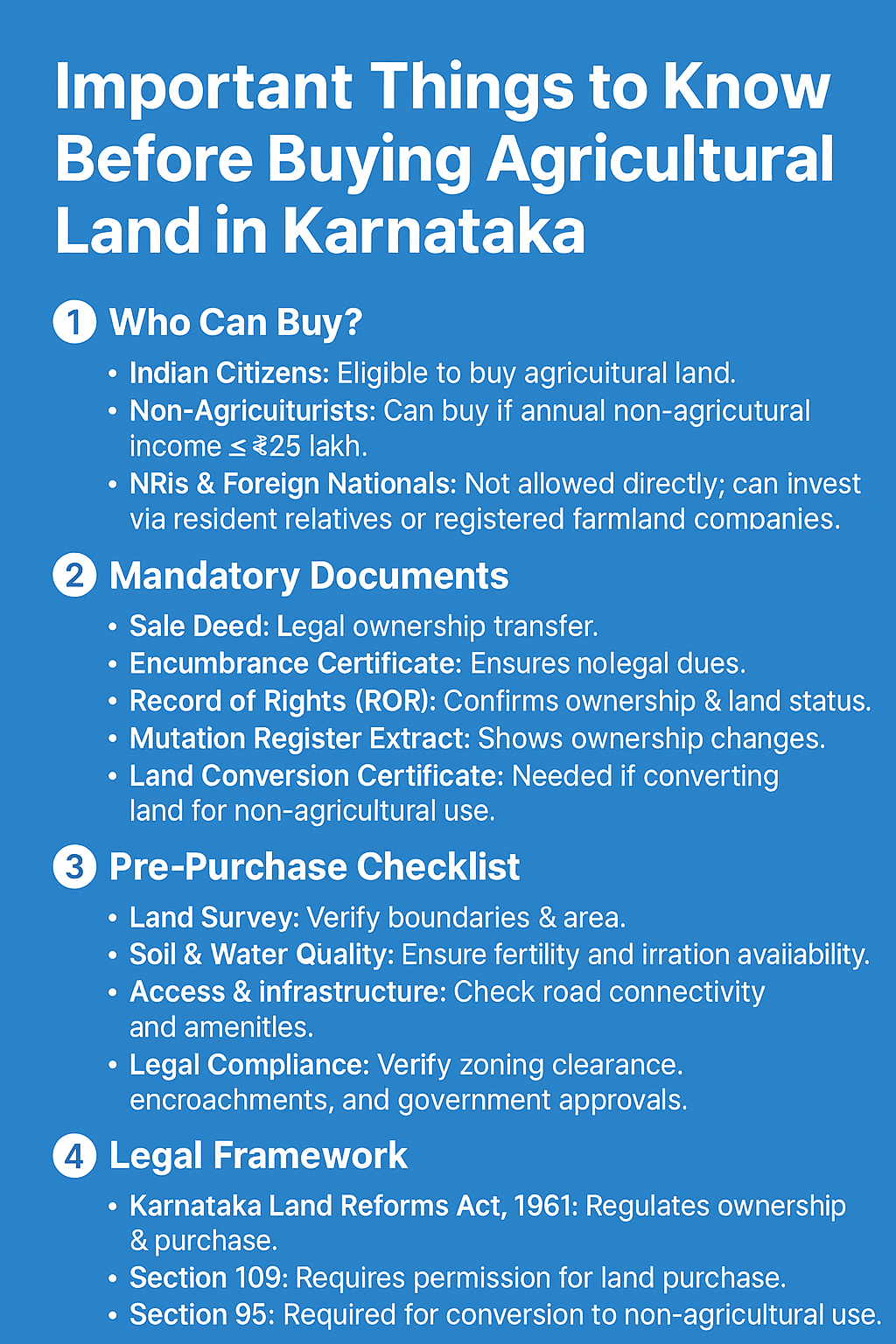
Important things to know before buying agricultural land in Karnataka
Buying agricultural land in Karnataka involves more legal and regulatory considerations than residential or commercial property. Here’s a detailed checklist of important things to know before buying agricultural land in Karnataka, especially after the 2020 amendments:
✅ 1. Legal Eligibility to Buy Agricultural Land
- Before 2020: Only farmers (registered) could buy agricultural land in Karnataka.
- After 2020 Amendment:
- Anyone can now purchase agricultural land (no farming background needed).
- The income limit of ₹25 lakh and other restrictions have been removed.
However:
- NRI/PIOs still cannot purchase agricultural land in India under FEMA laws.
📜 2. Essential Legal Documents to Verify
- RTC (Record of Rights, Tenancy & Crops)
- Confirms the titleholder, land type, and cultivation history.
- Obtain from Bhoomi portal.
- Mutation Extract (MR)
- Shows ownership changes and property transfers.
- Pahani
- Local term for land record — contains details of survey number, area, soil type, etc.
- Encumbrance Certificate (EC)
- Confirms the land is free from legal dues or mortgages (get from Sub-Registrar’s office).
- Form 10, 11 & 12
- Village form records confirming land revenue and tax payments.
- Conversion Order (if applicable)
- If the land is partially converted for non-agricultural use, verify DC conversion.
🗺️ 3. Physical Land Verification
- Survey the Land with a licensed surveyor to verify boundaries.
- Check for Disputes: Avoid land under litigation or joint family ownership.
- Zoning: Make sure land is not part of protected forest, lakebed, green belt, etc.
💧 4. Infrastructure & Utility Access
- Water Source: Verify borewell, river, or canal irrigation availability.
- Electricity: Ensure agricultural connection (separate from domestic).
- Access Roads: Check if land has direct road access — ideally a “patta road” or public road.
🚫 5. Restrictions & Prohibited Lands
Avoid:
- Inam lands (gifted lands, unless re-granted)
- Gomala (grazing) land
- Forest land (even if privately held – often non-transferable)
- Land under litigation or pending acquisition
🧾 6. Tax & Revenue Compliance
- Confirm all land revenue (kandaya) is paid up to date.
- Ensure no pending loans or crop insurance claims on the land.
🔄 7. Land Conversion (if you plan non-agriculture use)
- To use for residential, industrial, or commercial purpose:
- Apply for DC conversion (District Commissioner).
- After conversion, apply for Khata transfer and building permissions.
👨⚖️ 8. Use a Local Advocate or Consultant
- Land deals in Karnataka can be complex, especially in rural areas.
- Hire a local lawyer or property consultant to:
- Conduct due diligence
- Validate documents in Kannada
- Draft Sale Agreement and Sale Deed
- Register the deed with Sub-Registrar
🧠 9. Other Practical Tips
- Always get a registered sale deed, not just a GPA (General Power of Attorney).
- Avoid oral agreements — insist on written, signed, and witnessed documents.
- Verify whether tenant rights (if any) exist on the land.
- If buying large acreage, confirm if land ceiling laws apply (as per Karnataka Land Reforms Act).